

Rapid Measurement System for Ship Deck Flatness
The construction of new vessel types such as 20000TEU container ships and 400KVLOC has placed extremely high demands on the horizontal accuracy of sectional assembly. Due to the larger structural design of newly built vessels, the number of measurement data required for the horizontal bulkhead plane, guide rail installation, and strengthening web installation is relatively large, with higher accuracy requirements and greater difficulty in accuracy control. During the sectional construction process, it is necessary to strengthen the monitoring of accuracy control, strictly monitor the positioning of the sectional base structure, and improve the sectional accuracy by measuring, analyzing, and adjusting the horizontal level of the sections multiple times at each construction stage.
With the construction of new ship types such as 20000TEU container ships and 400KVLOC, extremely high requirements have been put forward for the horizontal accuracy of sections. Due to the larger structural settings of newly built ship types, the number of measurement data required for the horizontal bulkhead plane, guide rail installation, and strengthening rib installation is relatively large, and the accuracy requirements are high, making accuracy control more difficult. During the section construction process, it is necessary to strengthen the monitoring of accuracy control, strictly monitor the positioning of the section base structure, and improve the section accuracy by measuring, analyzing, and adjusting the section level multiple times according to the various construction stages.
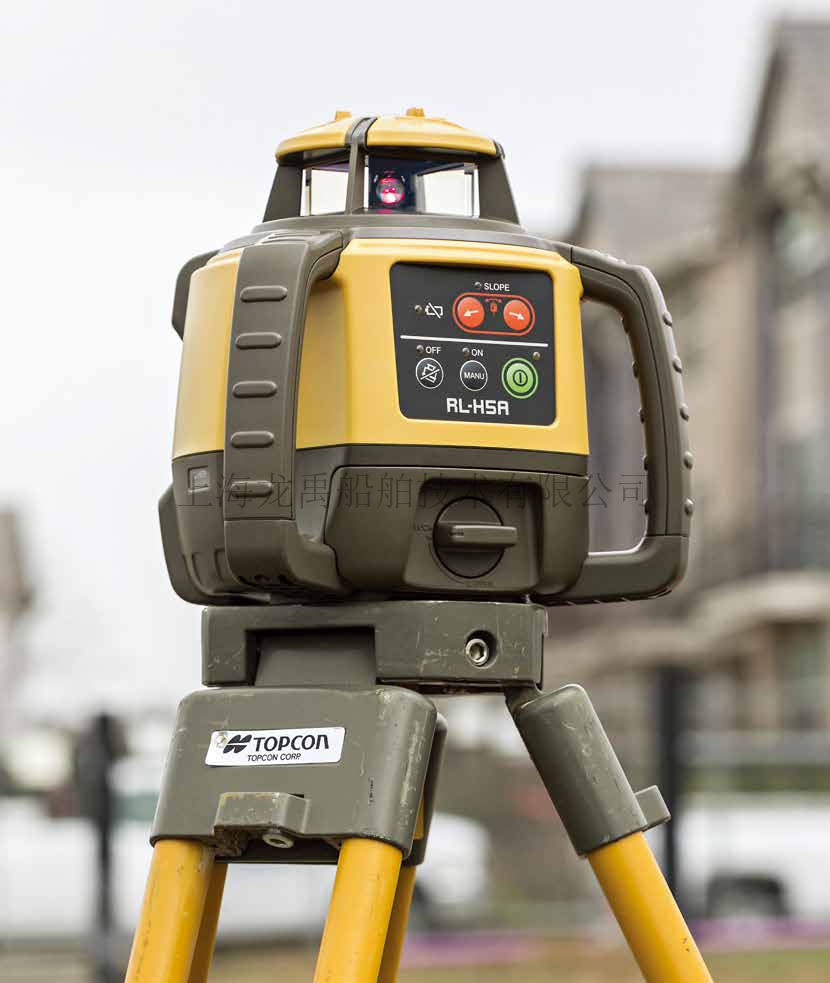
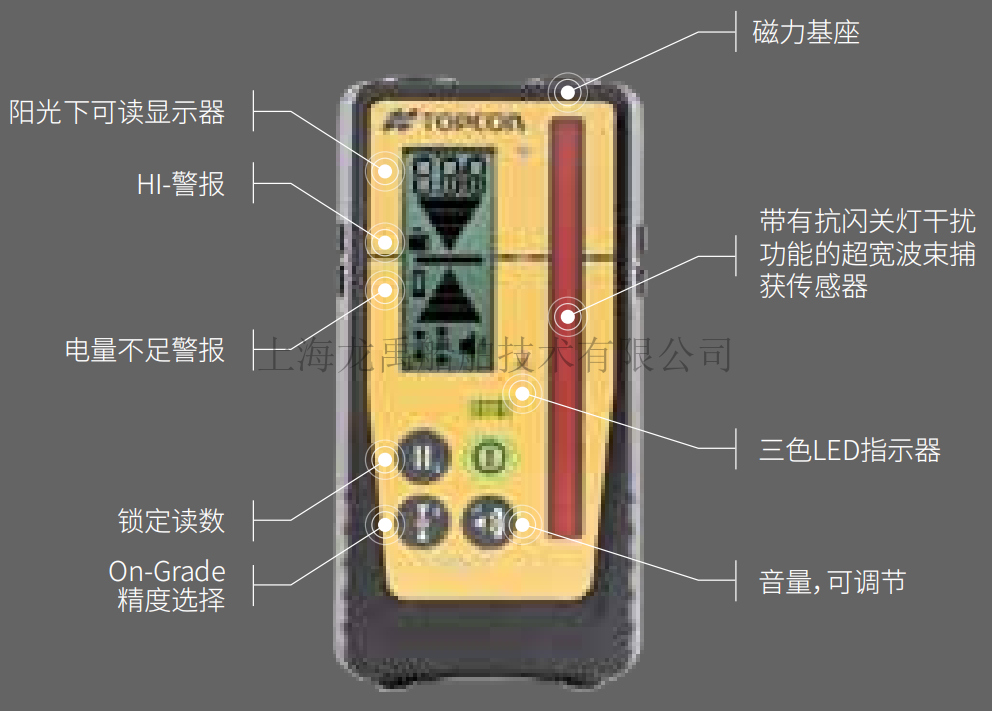
Figure 1 Topcon Laser Leveler
1. Use of Laser Leveler in Guide Rail Measurement
The positioning and manufacturing accuracy requirements for the guide rails of the 20000TEU container transverse bulkhead are high, with the horizontal level needing to be controlled within the range of 0 to -3mm. Inspection is required at two stages: before and after welding of the guide rails. Each transverse bulkhead has 7 guide rails on both the bow and stern sides. To ensure the horizontal accuracy of the guide rails during platform side tire production, there are more than 20 measurement points on each guide rail, requiring multiple on-site inspections to ensure that the guide rail level meets the accuracy requirements. Using a level to measure the bow guide rail of the transverse bulkhead takes about 1 hour per measurement, while the stern guide rail takes about 1.5 hours per measurement due to the influence of the cradle. Each measurement requires two people to cooperate. A rough estimate of the total labor hours for measuring the accuracy of guide rails B and C in all bulkheads of the container ship under construction is approximately 160 hours per person, totaling 640 man-hours (1 man-hour = 1 hour/person). The workload of using a level to measure the transverse bulkhead guide rails alone is already beyond capacity, making the measurement work in the platform area even more difficult to meet.
Using a laser leveler to measure the bow guide rail of the transverse bulkhead takes 10 minutes per measurement; measuring the stern guide rail takes 40 minutes per measurement, and each measurement only requires one person to operate. A rough estimate shows that the total time required for measuring the accuracy of the transverse bulkhead guide rails B and C in the container ship under construction is approximately 103 hours, saving approximately 540 man-hours compared to using a level, greatly improving work efficiency and shortening the construction cycle of the transverse bulkhead section.
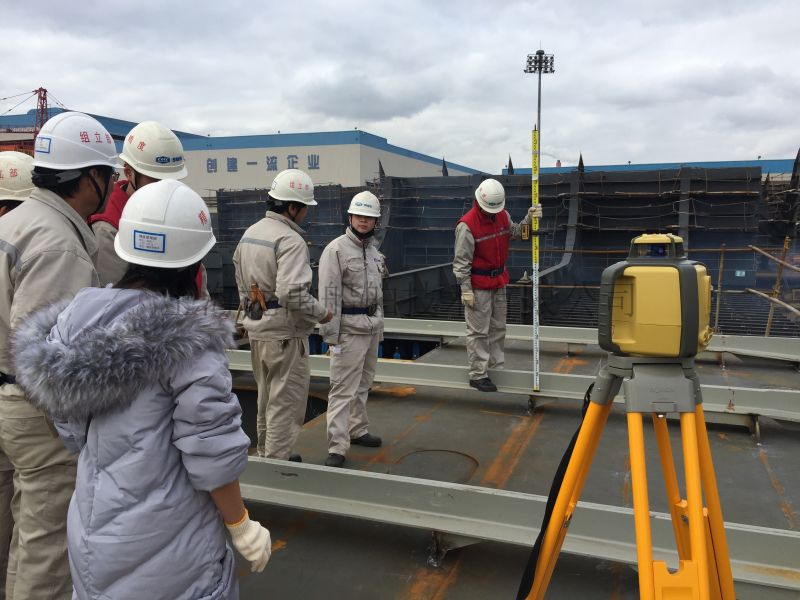
Figure 2 Use of Laser Leveler in Guide Rail Measurement
2. Use of Laser Leveler in Strengthening Rib Measurement
The number of strengthening ribs in the 20000TEU container ship under construction is relatively large, and the accuracy requirements are high. There are a total of 2300 strengthening ribs on the entire ship, and the horizontal requirement for strengthening ribs on a single section is 0-3mm. To ensure the overall horizontal level of the ribs on the section, 4 measurement points must be set on each rib, and the accuracy of a single rib must reach ±1mm. After the ship is launched, the inspection intensity of the strengthening ribs is high, the measurement time is long, and each measurement requires two people to cooperate. Using a level to measure each compartment takes about 3.5 hours per measurement; and the number of measurements required is relatively large. The 20000TEU container ship has 24 compartments, and each compartment needs to be measured more than 4 times on average. A rough calculation shows that during the construction of the 18000TEU, a total of approximately 1600 man-hours were required to measure the strengthening plates.
Using a laser leveler to measure the strengthening ribs takes about 1 hour per compartment, and each measurement only requires one person to operate. If a laser leveler is used to measure the strengthening ribs of the 20000TEU container ship, the total time is expected to be controlled within 200 man-hours, which is an improvement of more than 87% compared to the measurement speed during the construction of the 18000TEU.
The 20000TEU container ship has a large overall width. The maximum size of the ribs to be installed in the compartment reaches 55 meters, and the horizontal accuracy requirements for the strengthening ribs are high. The currently used level requires visual observation of the benchmark height, which is prone to visual deviation, with an accuracy deviation of ±4mm per 30 meters; the accuracy deviation of the laser leveler is ±2mm per 30 meters, and the measurement values are automatically generated. Compared with the level, the laser leveler has higher accuracy and a lower measurement error rate. If the strengthening ribs need to be adjusted, it costs 50 yuan/piece. Using a laser leveler for positioning can greatly improve the installation accuracy of the strengthening ribs and reduce the rate of rib adjustment.
3. Economic Benefits of Using Laser Leveler
Using one laser leveler on a container ship can save 540 man-hours in guide rail level measurement and 1400 man-hours in strengthening rib level measurement. The application range of the laser leveler is far more than these two aspects. Its potential economic benefits and intangible benefits far exceed the figures calculated above. Adding a laser leveler will bring more and longer-term benefits in the future. Modern shipbuilding is an era of precision shipbuilding and technological shipbuilding. The use of laser levelers and their gradual promotion to replace levels is a trend of the times.
Company Address: Room 201, Building 11, No. 299, Bisheng Road, Pudong New District, Shanghai
Company Telephone:021-33830252
Company Fax: 021-33830253
Company Postcode: 201204
Company Email:service@shipac.com.cn