
Application of 3D laser scanning technology in ship desulfurization retrofitting
Ship exhaust emissions contain large amounts of particulate matter such as sulfur oxides and nitrogen oxides, and the resulting air pollution has increasingly drawn international attention. The 70th meeting of the Marine Environment Protection Committee (MEPC) of the International Maritime Organization (IMO) adopted a resolution to implement a global 0.5% sulfur cap on ship fuel in 2020. The four previously designated Emission Control Areas (ECAs) will continue to have a 0.1% limit. Desulfurization modification areas (from the engine room to the smokestack) have complex environments and limited space. During the design and modification process, it is necessary to obtain the actual spatial conditions and pipeline layout of the engine room. Three-dimensional laser scanning technology, by acquiring dense point cloud data, allows for high-fidelity reproduction of the internal scene, enabling designers to directly use the point cloud data for modification design.
Ship exhaust emissions contain large amounts of sulfur oxides, nitrogen oxides, and other particulate matter, and the resulting air pollution has increasingly attracted widespread international attention. The 70th meeting of the Marine Environment Protection Committee (MEPC) under the International Maritime Organization (IMO) passed a resolution to implement a global 0.5% sulfur cap on ship fuel in 2020. The four previously designated Emission Control Areas (ECAs) will continue to have a 0.1% limit. The desulfurization modification area (from the engine room to the smokestack) has a complex and confined space. During the design and modification process, it is necessary to obtain the actual spatial conditions and pipeline layout of the engine room. Three-dimensional laser scanning technology, by acquiring dense point cloud data, allows for high-fidelity reproduction of the internal scene, enabling designers to directly use the point cloud data for modification design.

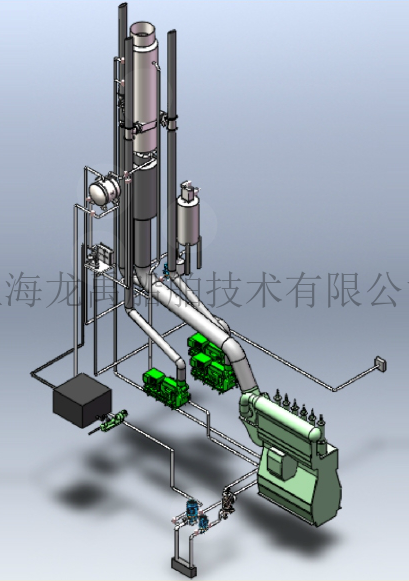
Figure 1: Schematic diagram of desulfurization structure location
1. Three-dimensional Laser Scanning Technology
1.1 Brief Introduction of the Principle
Three-dimensional laser scanning technology, also known as reality capture technology, breaks through traditional single-point measurement methods and has the unique advantages of high efficiency and high accuracy. Three-dimensional laser scanning technology can provide three-dimensional point cloud data of the scanned object surface, so it can be used to obtain high-precision and high-resolution digital terrain models.
1.2 Introduction to SCENE Software
SCENE software is specifically designed for all Focus, Freestyle3D, and third-party laser scanners. It allows for easy and efficient processing and management of scanned data through the use of real-time on-site registration, automatic object recognition, scan image registration, and positioning functions. By integrating the use of targetless and target-based automatic scan positioning functions, high-quality full-color data can be generated quickly and easily.
2. On-site Data Acquisition
2.1 Development of On-site Scanning Plan
Taking a bulk carrier as an example: The desulfurization modification location is in the area below the third deck, the third deck area, the second deck area, and the smokestack area; the scanning area is confined and needs to be measured as a single file; measurement transmission between upper and lower decks requires the use of stairs for visual splicing and transmission; the area to be scanned is "cylindrical," with a total height of approximately 40m. Considering the splicing error, at least 3 common target balls and some common areas should be used for data splicing processing.
After on-site exploration and confirmation with the modification design engineer, the key scanning and measurement areas are identified. During on-site scanning, the number of stations in key areas should be appropriately increased to ensure the point cloud density and effect.
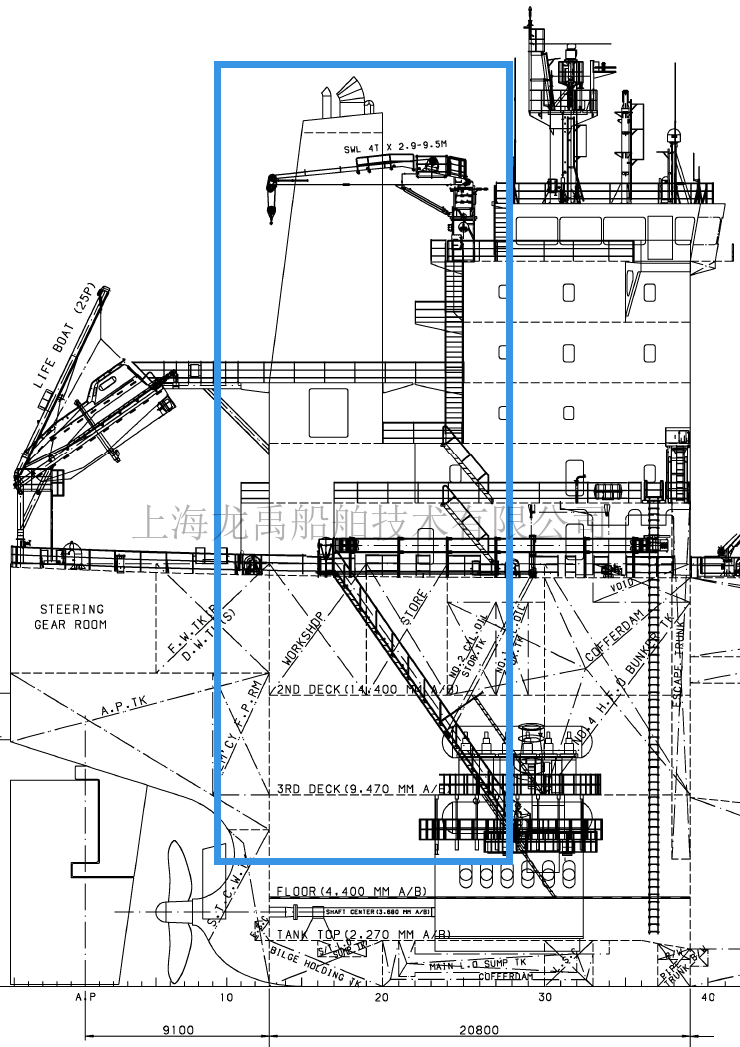
Figure 2: Schematic diagram of the desulfurization modification area
2.2 On-site Data Acquisition
Since the engine group in the engine room is still operating, slight vibrations will occur. During scanning and measurement, the compensator needs to be turned off, and appropriate locations should be selected for placing common target balls and setting up instruments; during the scanning process, avoid personnel movement; the single-station measurement time is approximately 6 minutes; when scanning, select the "photo" function to attach color to the point cloud data, which facilitates higher scene restoration during subsequent modifications.
3. Point Cloud Data Processing
3.1 Splicing of Point Cloud Data from Multiple Measurement Stations
Use point cloud post-processing splicing software to splice data from multiple measurement stations. Use automatic target ball recognition and automatic common area splicing functions to complete the splicing of the overall data. After data splicing, perform denoising and decimation operations on the point cloud. Various common point cloud data formats can be output, such as: *.pts, *.ptx, *.xyz, *.e57, *.rcp, *.dxf, *.igs, etc.
3.2 Application of Scanned Point Cloud Results
When using point cloud data for desulfurization device modification, there are mainly two methods:
One method is to import the point cloud data into reverse modeling software for reverse modeling processing. After modeling is completed, the model is imported into the shipyard's own design software as a background for modification design;
Another method is that if the shipyard's own design software supports point cloud data reading, the point cloud data can be directly imported into the design software as a design background for modification design.

Figure 3: Engine room internal scan point cloud result 1
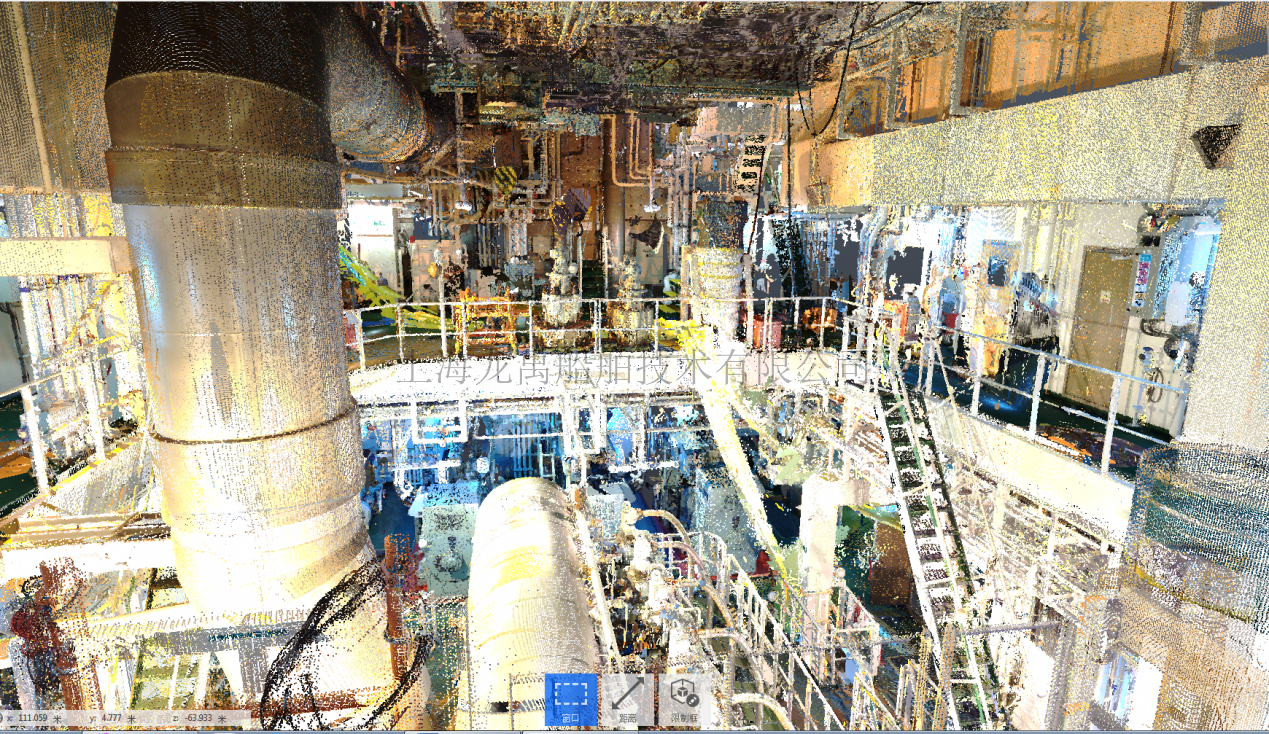
Figure 4: Engine room internal scan point cloud result 2
4. Summary
The application of three-dimensional laser scanning technology in ship desulfurization modification provides design engineers with high-precision information on the actual spatial conditions on site. This not only helps engineers to quickly modify desulfurization devices but also allows for advance planning of the lifting and lowering of tools and equipment; it can also check for interference and collision between pipelines and equipment.
Three-dimensional laser scanning technology greatly improves measurement efficiency compared to traditional measurement methods. The entire measurement process only requires 1-2 people to complete the data acquisition task. Design engineers do not need to repeatedly enter and exit the ship's cabin; they only need to view the scan results on a computer for design, reducing error rates and shortening the overall project duration.
Company Address: Room 201, Building 11, No. 299, Bisheng Road, Pudong New District, Shanghai
Company Telephone:021-33830252
Company Fax: 021-33830253
Company Postcode: 201204
Company Email:service@shipac.com.cn